-
![Silvano Venturi]()
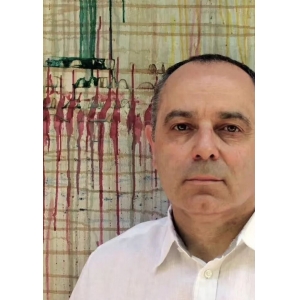
Silvano Venturi
他通过一系列主要的绘画经历开始了他的艺术生涯,然后通过对物体的日益关注,通过环境装置和多材料实验研究其原型和象征价值以及标志,形状和空间之间的关系从八十年代后半期开始,他参与了旨在通过各种形式和语言(三维绘画,冷巴洛克,彩绘雕塑)的特殊形式混合技术语言来更新艺术语言的研究,这将成为90年代艺术界的特征。参加由Giorgio Cortenova策划的“1980年代的抽象分离”和Renato Barilli策划的“AnniNovanta”等展览。
More
He embarked on his artistic career through a series of key painting experiences. From the second half of the 1980s onwards, with a growing focus on objects, he began investigating their archetypal and symbolic values, as well as the relationships between signs, forms, and space, by means of environmental installations and multi-material experiments. During this period, he also participated in research aimed at renewing the language of art through a distinctive hybrid technical language that combined various forms and vocabularies—including three-dimensional painting, "cold Baroque," and painted sculpture—which would go on to characterize the art world of the 1990s. He has taken part in exhibitions such as Abstract Separation in the 1980s (curated by Giorgio Cortenova) and AnniNovanta (curated by Renato Barilli). -
![保罗·佛拉特纳 Paolo Fraternali]()
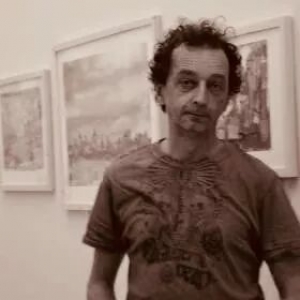
保罗·佛拉特纳 Paolo Fraternali
艺术家,版画家。1964年9月14日生于意大利乌尔比诺,他毕业于乌尔比诺公共艺术学院的雕刻专业,于1987年从乌尔比诺学院毕业。他受过艺术教育,在意大利各地为雕刻师和版画艺术家工作。现任威尼斯美院版画专业教授。
More
Artist and printmaker. He was born on September 14, 1964, in Urbino, Italy. He studied sculpture at the Urbino Public Academy of Arts and graduated from the Urbino Academy in 1987. With a formal art education background, he has worked as a sculptor and printmaker across various regions in Italy. Currently, he serves as a professor in the Printmaking major at the Academy of Fine Arts in Venice. -
![艾丽莎·卡列洛娃]()
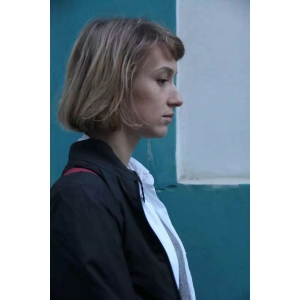
艾丽莎·卡列洛娃
艾丽莎·卡列洛娃认为艺术是“Reality”。“Reality”不是客观现实,而是内在精神。这就是说,艺术作品是主观的产物,是艺术家根据自己对外部客观现实的观察、体验、认识和想象,重新营造一个能表达精神实质的世界。 在艾丽莎·卡列洛娃看来,"我们的心灵才是客观世界的真实反映。"而现实事物的人性均已被非人的力量所歪曲,人已变为失去尊严与价值的被动的机器,但这不为每个人洞察到。因此,艺术家要揭示人性的“Reality”,意味着把自己的品格或理念转化为幻象,这幻象便是主体“内在需要的外在表现”,或者说是感性情感的外部投影。
More
Elizaveta Kalyuzhna (Note: The standard transliteration of "艾丽莎・卡列洛娃" in academic and artistic fields is typically "Elizaveta Kalyuzhna"; adjustments can be made if there is an officially used English name) believes that art is "Reality". This "Reality" is not objective reality, but the inner spirit. In other words, a work of art is a product of subjectivity—it is a world reconstructed by the artist to express the essence of the spirit, based on their observation, experience, understanding and imagination of the external objective reality.
In Elizaveta Kalyuzhna’s view, "Our soul is the true reflection of the objective world." However, the humanity in real things has been distorted by inhuman forces, and people have become passive machines deprived of dignity and value—yet not everyone perceives this. Therefore, for artists to reveal the "Reality" of human nature means transforming their own character or philosophy into an illusion. This illusion is the "external manifestation of the subject’s inner needs" or, in other words, the external projection of emotional sensations. -
![Giulia Spugnoli]()
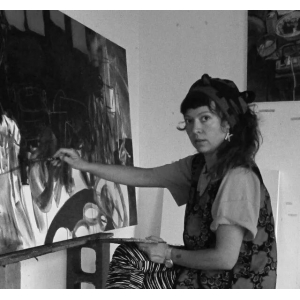
Giulia Spugnoli
用绘画形式记录下瞬间,如同视频剪辑在同一个时刻,一群人在唱歌,一个难民刚刚结束来之不易第第一餐,一位望向窗外的女孩,三位在车里聊天的朋友。关于这个时代,这些片段带给我们的反思。我们的生活被互联网包围,虽然彼此距离遥远,分享有共鸣的生活瞬间变得很普遍。类似唱歌,类似驾驶汽车这样的普通体验….在照片上我继续创造,在照片上绘画。在照片的视觉叙事性上添加我个人的诗意表现方式。现实与幻想形成了强烈的对比关系。这是一个有关感官的装置。它用绘画作为独特的,鲜活的却又严谨的表现形式,通过光谱模拟,再现了一系列的摄影作品。
More
Simultaneity melt this painted scenes as a video cut.At the same time ..a group of people sings, a refugee just finished his meal, a girl look out of the window, three friends speaks in the car...A reflection about the symultaneity experience tipic of our time, everything is inetr-connected, places geografically far shares similar moments of daily life, universal emotions like the singing, common experience like beeing driving a car.The painting act become a controlled act which play on the photographic image. The narrativity of photography and its strong relation with reality is beeing showed by the poetic of color of painting.It is a device of sense to deal with the spectral simulacrum of serial reproduction of photography through painting as controlled act, unique, alive. ——Giulia Spugnoli